MLB 9 Innings 26
- 4.5
- Rating
- 10.00M
- Installs
- Free
- Price

 Analysis by App-foxy
I spent time with MLB 9 Innings 26 as a mobile baseball game, and my first impression was that it is built for people who enjoy following a season as much as they enjoy individual plays. It is free to start, easy to recognize as a sports title, and developed by Com2uS, but it is not simply a quick arcade game that you open for a few swings and forget. The appeal comes from building a sense of progress, making choices around your team, and returning often enough to see whether those choices improve the next game.
That approach makes it a particularly interesting option for baseball fans who want something more involved than a one-match casual game. I also think it is important to set expectations early: this is a long-term mobile experience, not a compact premium game with a clearly defined finish. The best question is not whether it can provide one exciting game, but whether its ongoing goals and gradual improvement are the kind of routine you personally enjoy.
What the first sessions are really trying to teach you
The early part of the experience works best when I treat it as an orientation period rather than a test of baseball skill. Instead of expecting to understand every option immediately, I found it more useful to focus on the basic rhythm: play, inspect the result, adjust the team, and try again. That loop gives new players a practical reason to learn the menus instead of presenting them as disconnected screens.
You May Also Like

 Google Keep - Notes and lists
Google Keep’s Quiet Growth Shows the Appeal of Simpler Notes
As mobile work gets busier, Google Keep keeps winning a simple contest: capture a thought quickly, find it later, and get on with the day.

 Blood Strike: 2.5 Anniversary
Blood Strike’s Loadouts Turn Every Drop Into a Tactical Gamble
A close look at Blood Strike’s custom loadouts: how fast access to signature weapons reshapes its battle royale rhythm, rewards preparation, and narrows the gap between fights.

 Pandora - Music & Podcasts
Pandora’s Music Is Easy to Start, but Harder to Recover
Pandora’s strength is its low-effort path from a seed to a station. Its weak spot is how much confidence it asks you to place in connection, setup, and quiet recovery.

 8 Ball Pool
 Is Built on Rivalries, Rematches, and Routine
A close look at the rivalries, rematches, shared routines, and unanswered safety questions that turn a quick pool match into a persistent mobile community.

 Samsung Music
’s Quiet Strength Is Playing What You Already Own
Its reach comes less from spectacle than from dependable access to a personal library. That simplicity is both the app’s strongest retention engine and its ceiling.

 AccuWeather: Weather Radar
AccuWeather Review: A Quick, Clear Forecast for Everyday Decisions
For everyday plans, the best forecast is the one you can understand quickly. AccuWeather makes rain timing, radar, and local conditions easy to act on, with a few trade-offs.
More From Our News Desk



My advice is to choose one simple early goal and stick with it. Improving the next few games is more useful than trying to optimize every decision at once. A new player can easily spend too much time looking for the perfect setup before understanding what actually affects their enjoyment. In my experience, the game becomes clearer when I use each match to answer one question, such as whether a change makes the team feel more reliable or whether a particular approach suits the way I like to play.
This is also where the difference between a baseball simulation and a fast arcade title becomes noticeable. A purely arcade alternative usually gives immediate feedback: time the action, score, and move on. Here, the satisfaction is more cumulative. A good result matters because it becomes part of a wider attempt to strengthen the team and reach the next meaningful target. Players who like sports management ideas alongside on-field action will probably settle into that structure faster than players who only want instant control.
The short-term goals are valuable because they prevent the opening hours from feeling directionless. Still, I would not describe the beginning as completely effortless. There are enough systems and decisions to make the game feel broader than a simple batting challenge, and that can create friction for someone who downloads it expecting a very light pick-up-and-play experience. I recommend giving yourself a little time to learn the flow before deciding whether it is too complicated.
Why small improvements matter more than dramatic rewards
One of the more effective parts of the design is the way progress can feel meaningful even when the change is modest. A better result in the next game, a more dependable lineup, or a clearer understanding of what to adjust can be enough to create momentum. I do not need every session to end with a spectacular unlock for the game to feel worthwhile.
That said, this style of progress rewards patience. If you expect a new team identity or a major transformation after every short session, the pacing may feel slow. The game asks me to appreciate incremental gains, and that is a genuine preference rather than an objective strength. Baseball itself often revolves around small advantages, so the measured pace fits the subject, but it will not satisfy everyone.
A useful habit is to keep a mental note of why you changed something. If I alter several parts of the team at once, it becomes difficult to tell which decision helped and which merely added noise. Making one meaningful adjustment, playing enough to notice its effect, and then deciding what to do next turns progression into a learning process rather than random tapping.
Progress signals, unlocks, and the feeling of building a team
The strongest reason to keep returning is the sense that matches contribute to a larger personal project. I am not only chasing the result of the current game; I am also watching for signs that the team is becoming more capable and that my decisions are becoming more informed. Those signals are important in a mobile sports game because they give ordinary sessions a purpose.
I found that the most satisfying progress comes when the result connects to a decision I made earlier. If I understand why a team feels more stable or why a particular approach produces better outcomes, the improvement feels earned. By contrast, progress is less engaging when it seems like a reward that arrives without any relationship to how I played. That is why I prefer to slow down and read what the game is showing me instead of rushing through every screen.
The best way to enjoy the progression is to measure understanding as well as team strength. That may sound minor, but it changes the experience. I can finish a session with a better idea of what works for my style, even if the immediate result is not perfect. This makes the game more forgiving during a difficult stretch and gives losses a practical purpose.
There is also a trade-off in how much attention the progression layer demands. Players who enjoy checking options, comparing outcomes, and making gradual improvements will find more depth here than in a basic sports mini-game. Players who prefer to start a match immediately may feel that the surrounding decisions interrupt the action. Neither reaction is wrong; the game clearly favors the first type of player.
For a realistic everyday scenario, imagine opening it during a commute or while waiting for an appointment. A short session can work if you already know what you want to accomplish, such as testing one lineup change or completing a small part of your ongoing plan. If you open it without a goal and begin browsing every available option, the same amount of free time can disappear without feeling especially productive. I recommend deciding your session objective before you start.
How to avoid wasting early progress
My most practical tip is to resist making decisions just because a new option is available. Unlocking something does not automatically mean it belongs in your preferred setup. I get more value by asking whether it solves a problem I have actually noticed. That keeps the team-building process focused and prevents the early game from becoming a collection of changes I cannot evaluate.
I also suggest separating experimentation from routine play. When I am trying a new approach, I accept that the immediate result may be less consistent. When I want a calmer session, I return to the setup I understand. This simple distinction makes the pacing feel less frustrating because not every match has to serve the same purpose.
Another useful approach is to treat setbacks as information rather than proof that the whole team needs rebuilding. A difficult result can come from a specific weakness, a poor decision, or simply an awkward run of games. Changing everything at once removes the chance to learn. The game is more enjoyable when I make controlled adjustments and allow the next few matches to reveal whether they helped.
The difficulty curve: satisfying pressure or a slow wall?
The challenge in a long-running sports game needs to do two things at once: make improvement worthwhile and avoid making the player feel powerless. MLB 9 Innings 26 generally works best when I view difficulty as a reason to refine my choices rather than as a demand to play perfectly. The pressure gives the progression loop a purpose, because there would be little excitement in strengthening a team that never faces a meaningful test.
However, the difficulty curve can feel less welcoming when a player is still learning the game’s broader rhythm. A newcomer may understand how to play a match but not yet understand how to respond when results become less comfortable. That gap can make the game seem harsher than it really is. I would not judge it after only a brief first attempt; the value comes from learning what to change and seeing whether the next effort improves.
This is where it compares favorably with a simple arcade baseball alternative. Arcade games often provide sharper moment-to-moment excitement, but their challenge can depend heavily on reflexes. Here, the pressure is tied more closely to the relationship between performance and progression. That makes the game a better fit for someone who enjoys thinking through a problem, even if it is not the best choice for someone who wants every session to be instantly energetic.
The downside is that measured challenge can become repetitive if the player no longer feels that a new decision will change the outcome. When progression slows, the same loop may feel like maintenance instead of advancement. I noticed that my interest stayed higher when I gave myself a specific reason to continue, rather than playing automatically just because another match was available.
For that reason, I would recommend taking breaks instead of forcing a long session through a frustrating stretch. Returning later can make the same challenge feel more manageable, and it prevents the game from turning into a chore. This is especially relevant on mobile, where a title can become part of a daily routine without necessarily being suitable for uninterrupted play for hours.
Who will enjoy the challenge most?
Baseball followers who like gradual team improvement are the natural audience. The game also suits players who enjoy sports titles with a persistent sense of direction, where a result matters beyond the current screen. I can see it working well for someone who wants a familiar baseball theme but also wants reasons to revisit the game after the first novelty fades.
I would be more cautious recommending it to someone looking for a fully self-contained offline-style experience or a short campaign with a final conclusion. It is also less suitable for players who dislike repeated progression loops, menu decisions, or the possibility that the most satisfying results require patience. A console-style sports game may be a better alternative for someone who wants a deeper single-session presentation and less emphasis on returning over time.
Retention pressure and the cost of a free game
The free entry point makes it easy to try, and the Everyone content rating broadens its audience. At the same time, free mobile games often rely on long-term engagement, and this one is no exception in spirit: its structure encourages regular returns and gradual investment. I enjoy that when I am in the mood for a continuing baseball project, but I do not think every player will appreciate the same pressure to keep up with progress.
Optional purchases range from $0.99 to $129.99 per item. That range is worth noticing before starting, not because spending is required for every player, but because it changes how I think about the game’s economy. I prefer to decide in advance whether I am playing entirely for free or allowing myself a strict budget. Without that boundary, a temporary frustration can make a purchase feel like the easiest solution.
My recommendation is to play long enough to understand the free progression before spending anything. If the basic loop is not enjoyable on its own, a purchase is unlikely to repair that problem. If the loop does suit you, then you can make a more informed decision about whether convenience is worth the cost. This approach also keeps the focus on the baseball experience rather than on chasing every possible improvement immediately.
The retention design is not automatically a flaw. Returning to a team you have been shaping can be satisfying, especially when you have a clear target for the next session. The issue appears when the routine becomes obligation. I know I am enjoying the game when I open it because I want to test an idea or play baseball; I know I should step away when I am opening it only to avoid feeling behind.
Another practical point is device compatibility. The game requires Android 7.0 or later, so anyone using an older Android device should check that basic requirement before planning a download. On supported hardware, the current version is 11.0.0, which tells me the title is being treated as an ongoing product rather than a one-off release. That ongoing identity is central to both its appeal and its commitment of time.
How it compares with the usual alternatives
Compared with a quick arcade baseball game, this title offers more reason to care about what happens after the final play. The trade-off is that it asks for more patience and attention. Compared with a traditional premium sports game, it is easier to try without an upfront price, but its free-to-play structure and continuing progression may feel less direct than buying a game and simply playing through its available modes.
It also differs from a pure management game. I do not approach it only as a spreadsheet of decisions, because the baseball identity remains important to the experience. That middle ground is its main strength: it can appeal to someone who wants more than reflexes but less than a fully detailed management simulator. The right choice depends on whether you want your sports game to feel like a continuing hobby or a complete package.
The audience response suggests that many players find that balance compelling. It holds an average rating of 4.5 from around 242 thousand ratings, with roughly 37 thousand written reviews, and it has passed 10 million installs. Those figures do not replace personal testing, but they do indicate that the format has reached a substantial audience. I would still advise reading the game on its own terms rather than assuming popularity means it will match your preferred pace.
My progression verdict after living with the loop
MLB 9 Innings 26 succeeds when its goals, unlocks, and difficulty work together. The early objectives give me a reason to learn the game, the progress signals make small improvements visible, and the challenge gives those improvements meaning. Its pacing is deliberately persistent rather than explosive, so the experience rewards players who enjoy returning to a team and making careful changes.
My biggest reservation is the same quality that makes it appealing: it is designed to continue. The free-to-start model, optional purchases, and gradual progression can create pressure if I let the routine control my time or spending. I recommend treating it as a hobby with boundaries, not as a checklist that must be completed every day. That mindset makes the slower sections much easier to appreciate.
The game is free, rated for Everyone, and belongs firmly in the sports category, but those labels do not fully describe who should download it. I would recommend it to baseball fans who like incremental improvement, players who enjoy testing decisions across multiple sessions, and mobile users who want a sports game with a lasting sense of direction. I would point casual arcade fans elsewhere if they want instant action with almost no setup.
After trying its progression from that perspective, I came away with a positive but measured opinion. The ongoing goals are strong enough to sustain interest, the difficulty gives team improvement a purpose, and the everyday session structure works well when I decide what I want to accomplish before opening the game. If you enjoy building momentum one baseball session at a time, this is a worthwhile free download; if you want a finished, pressure-free sports game, choose a different format.
Com2uS has made a game that is easiest to enjoy on its own terms: not as a quick distraction, and not as a substitute for every kind of baseball title, but as a continuing mobile season shaped by small decisions. That is the reason I would recommend trying it, provided you are comfortable with its patient pace and keep control of the way you spend both time and money.
FAQs for MLB 9 Innings 26
01What is MLB 9 Innings 26?
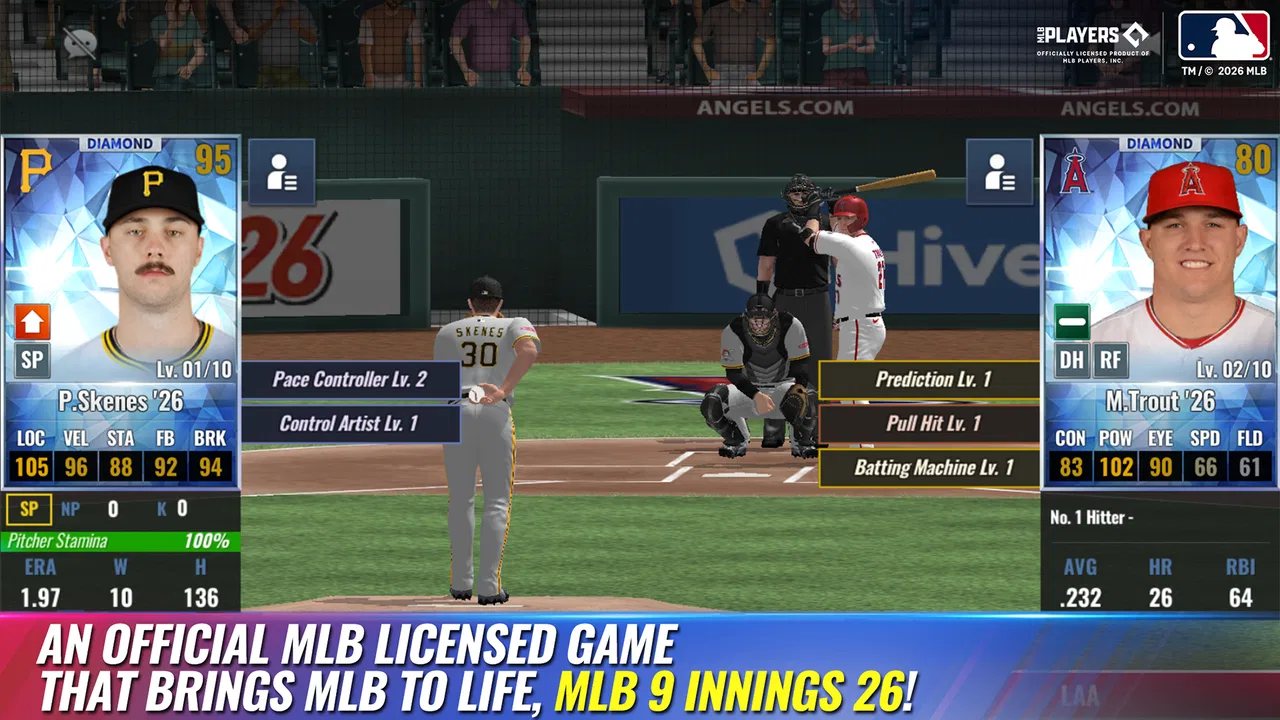
MLB 9 Innings 26 is a mobile baseball simulation game that allows players to experience the thrill of Major League Baseball. It features realistic gameplay, updated rosters, and stunning graphics. Users can build their dream team, manage players, and compete in various game modes. It’s available for both Android and iOS devices.
02What are the key features of MLB 9 Innings 26?
MLB 9 Innings 26 offers a variety of features, including real-time player stats, multiple game modes such as League and Exhibition, and the ability to collect and trade player cards. The game’s realistic 3D graphics and dynamic player movements provide an immersive experience, making it a popular choice for baseball fans.
03Is MLB 9 Innings 26 free to play?
Yes, MLB 9 Innings 26 is free to download and play. However, it contains in-app purchases that allow players to buy game currency, player packs, and other enhancements to improve their team. While purchases can enhance the gameplay, they are optional, and players can enjoy the game without spending money.
04Can I play MLB 9 Innings 26 offline?
MLB 9 Innings 26 requires an internet connection for most of its features, such as downloading updates, accessing the latest player stats, and participating in online multiplayer modes. However, some features might be available offline, but the full experience is best enjoyed with a stable internet connection.
05What devices are compatible with MLB 9 Innings 26?
MLB 9 Innings 26 is compatible with most modern Android and iOS devices. It requires Android 4.4 or higher and iOS 9.0 or later. For optimal performance, it's recommended to use a device with a strong processor and sufficient RAM. Always ensure your device meets the minimum requirements before downloading.
Pros
- Realistic gameplay with stunning graphics.
- Comprehensive roster updates and stats.
- Intuitive controls for easy play.
- Engaging multiplayer modes available.
- Regular events keep it exciting.
Cons
- Requires constant internet connection.
- Large download size may deter some users.
- In-app purchases can be pricey.
- Occasional lag in online matches.
- Battery consumption is quite high.

MLB 9 Innings 26
Gallery